
Humanities 人文科
Explore how Humanities students bring learning to life through fieldwork and RICH Fest, connecting History, Geography, and Social Studies to real-world issues.
Field-Based Learning
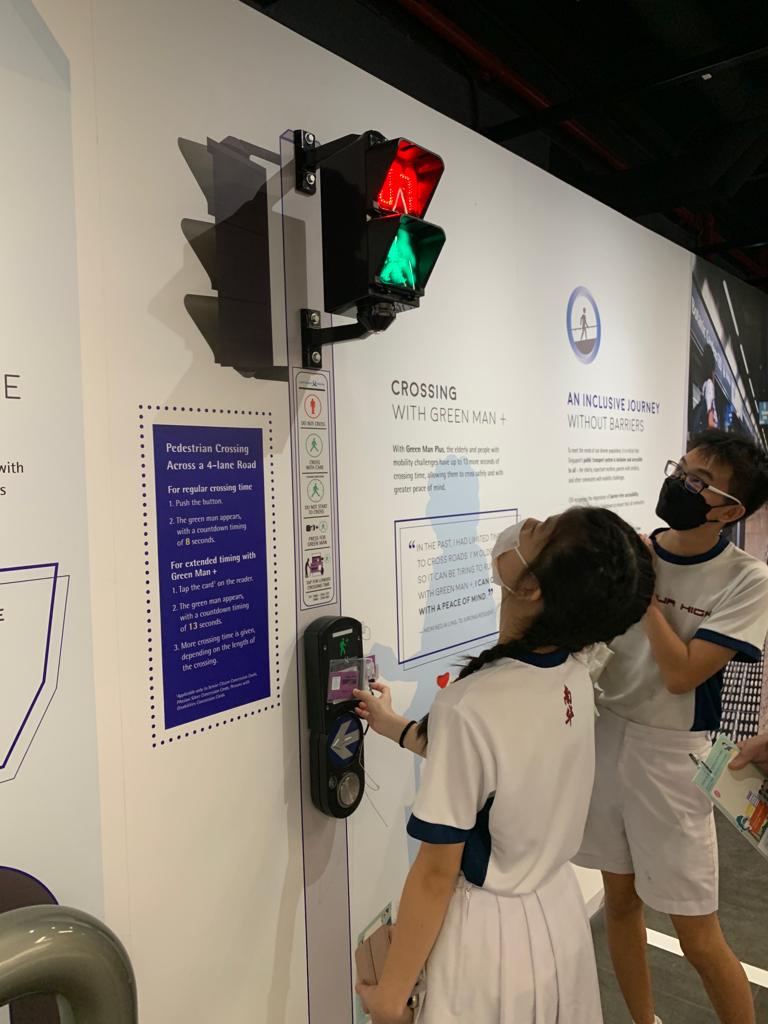
Students learning about cross lights
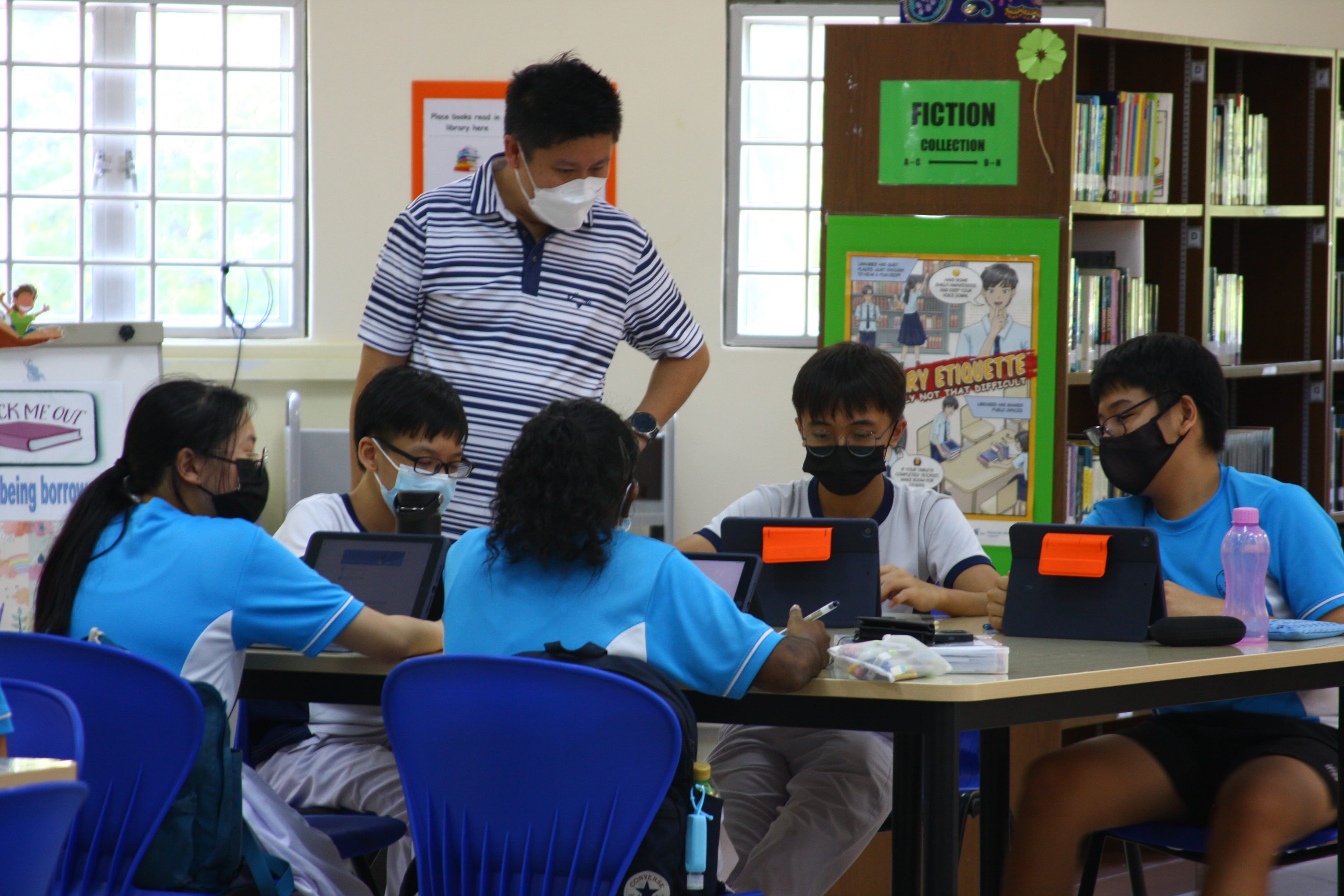
Issues Investigation in collaboration with New Town Secondary School
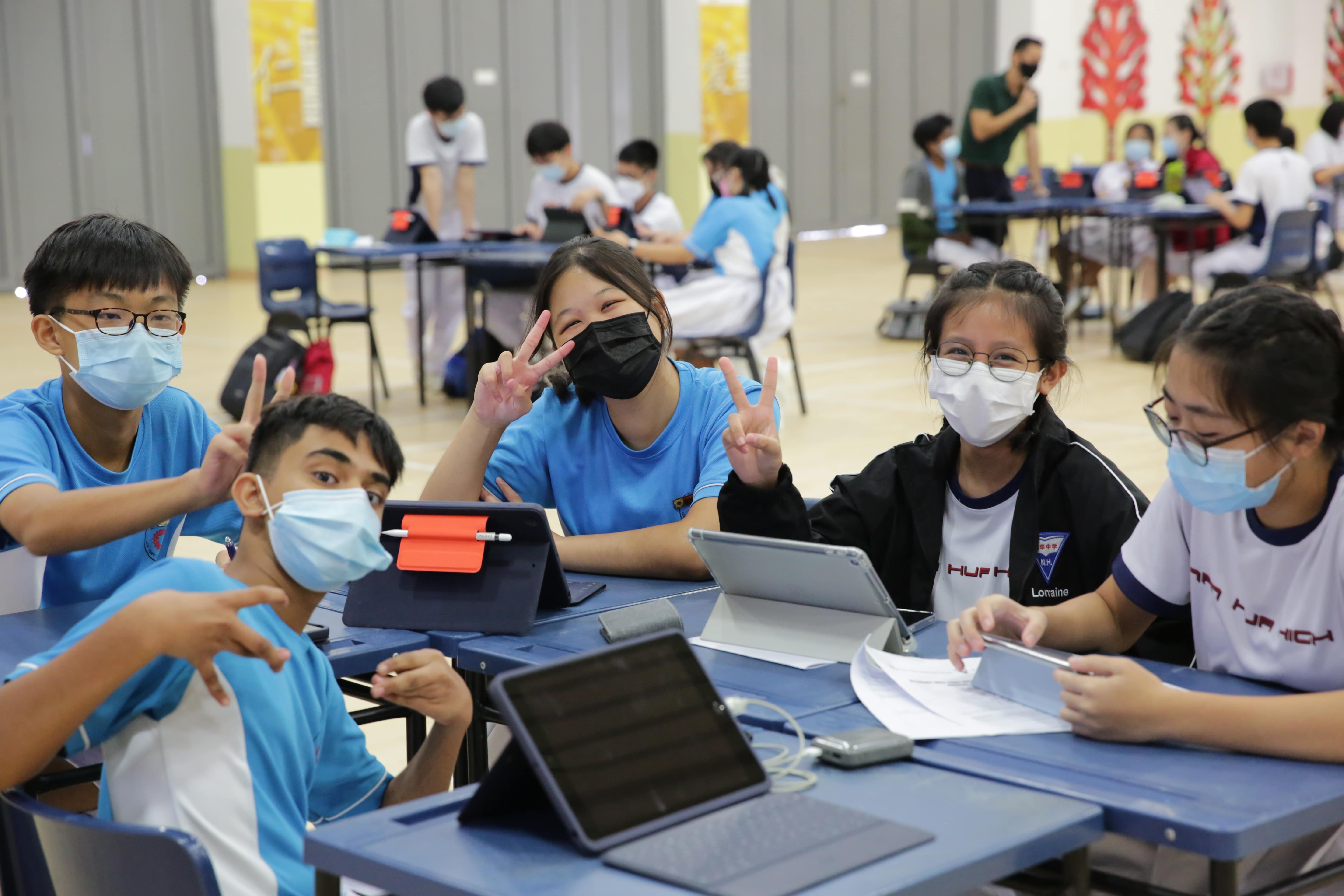
Bonding with friends
A major component of the Humanities curriculum, Field-Based Learning, comprises Historical Investigation, Geographical Investigation and Issue Investigation for Social Studies. This programme takes learning outside the classroom, and sees students taking ownership of the research process to generate questions about the topic at hand, plan the execution of data collection, and conduct their own fieldwork. For the second year, we held an inter-school Issue Investigation Collaboration with NTSS, which not only deepened their understanding of current social issues, but also gave our students a unique opportunity to learn from students of different backgrounds while honing their teamwork and organisational skills.
RICH Fest
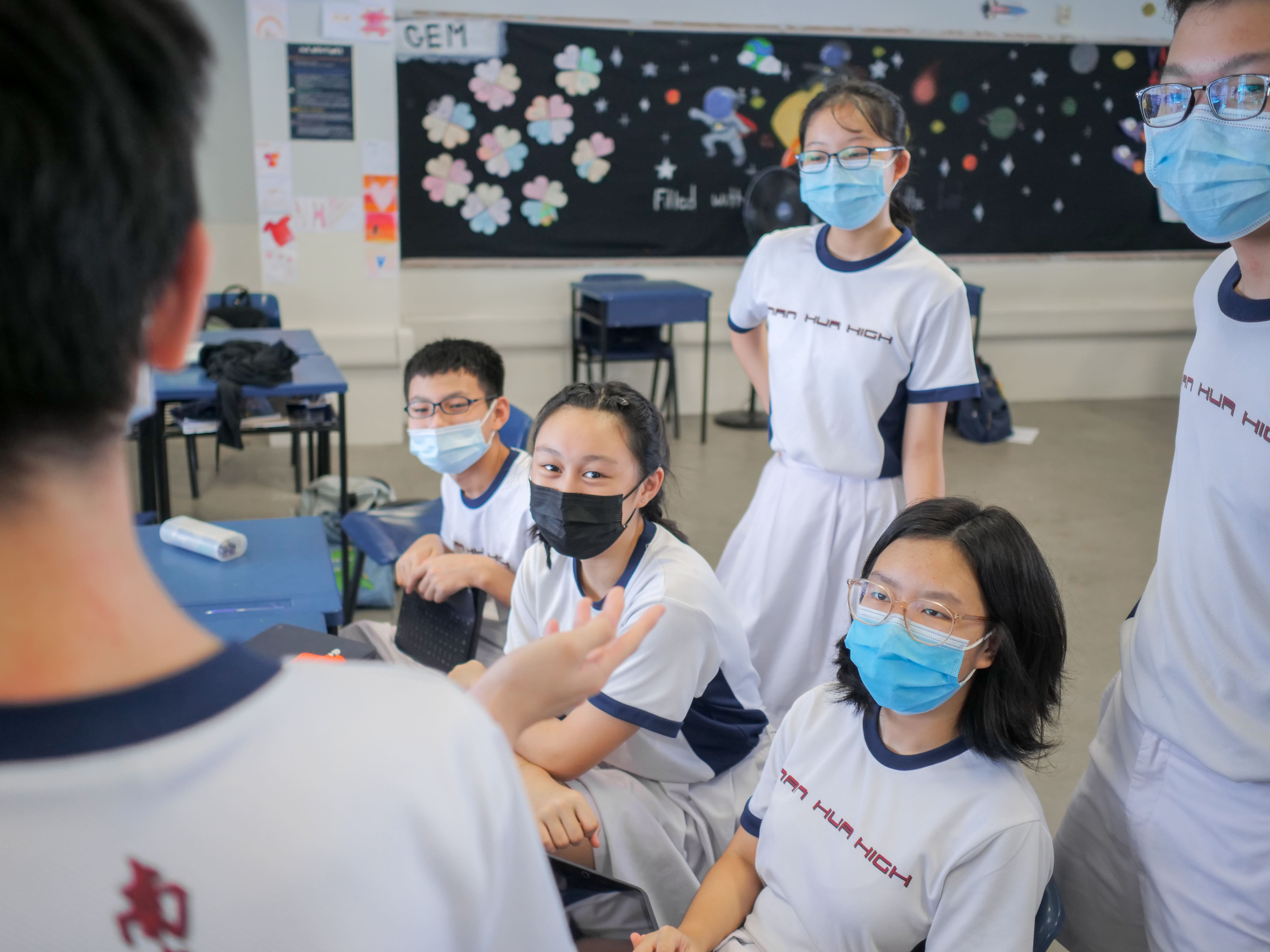
Listening to their classmate's presentation
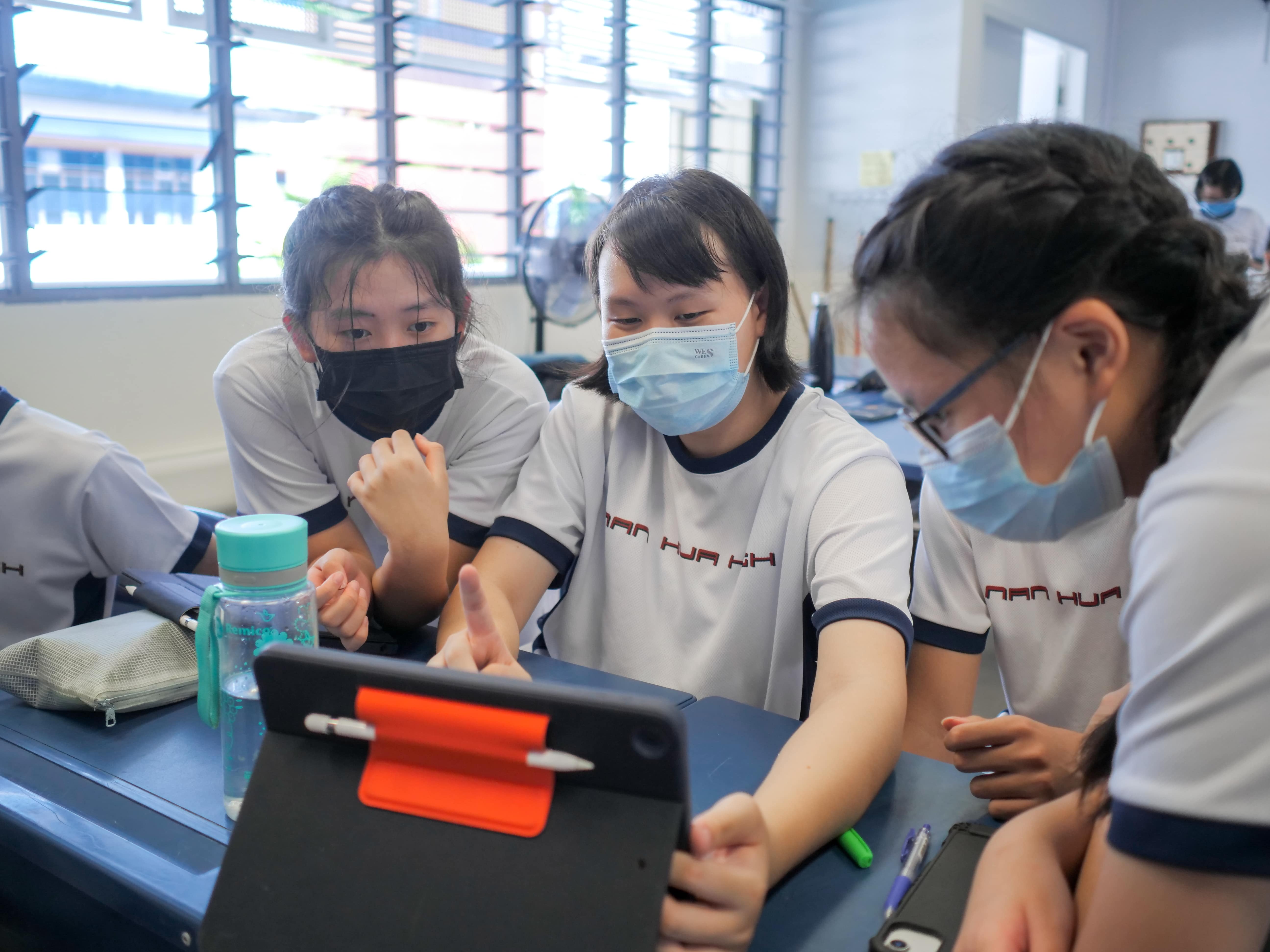
Sharing insights with one another
The Humanities department’s RICH Fest provided Secondary Two students with an innovative platform to gain a deeper understanding of History and Geography through exploring rich historical issues and geographical phenomena in ASEAN. Students learnt from one another‘s sharing and participated in engaging interactive activities such as Kahoot quizzes and food tasting. Their ability to leverage on the affordances of IT to engage one another was also heartening. This year’s RICH Fest once again ignited students’ passion for the Humanities and reinforced the relevance of the Humanities to their daily lives and experiences.
Student’s Reflection
“I felt that RICH Fest was definitely an insightful and fun experience. The festival was very educational and allowed us to apply what we learnt in History and Geography in real world settings, such as the reasons behind natural disasters or the rich culture of numerous Asian countries. In addition, RICH Fest gave us Nanhuarians creative freedom to present our projects in different ways such as Kahoot quizzes or other online game platforms, making the event that much more engaging and exciting.”
Lim Zhuo En, Myra (206)
**