

Mathematics 数学
Problem Solving and Computational Thinking
Problem solving lies at the heart of mathematics education. The department integrates Polya’s problem-solving approach and computational thinking to help students make sense of complexity and approach challenges with confidence. Through decomposition, pattern recognition, and abstraction, students learn to break problems into smaller parts, identify useful patterns, focus on key ideas, and plan logical steps toward a solution. As they design algorithms and represent them through flowcharts, they develop metacognitive awareness and a stronger sense of identity as mathematical thinkers.
Generative AI as a Thinking Partner
Secondary 3 students explored the responsible use of generative AI through a hands-on session on prompt engineering. They practiced using AI to guide their thinking and support their reasoning in trigonometric proofs, learning how to turn technology into a helpful thinking partner. The experience encouraged them to take ownership of their problem-solving while developing skills that are relevant for today’s digital world.
Applying mathematics through real-world experiences
Beyond thinking tools like AI, students also apply mathematics in hands-on, real-world contexts that make learning tangible and meaningful.
Sec 1 Interdisciplinary Project 2025
This year, the
Mathematics Department collaborated with the Food and Consumer Education
(FCE) teachers to help students experience the relevance of mathematics
in everyday life. In groups, students used mathematical reasoning to complete
a recipe by calculating missing values, determining suitable serving sizes,
and suggesting healthier alternatives before preparing the dishes themselves.
The fun and meaningful project has enabled students to apply concepts such
as ratio, proportion, percentage, and unit conversion, while discovering
the interconnectedness of knowledge. Through this collaboration, students
strengthened their identity as confident, adaptable learners and built
a sense of community through shared passion and teamwork.
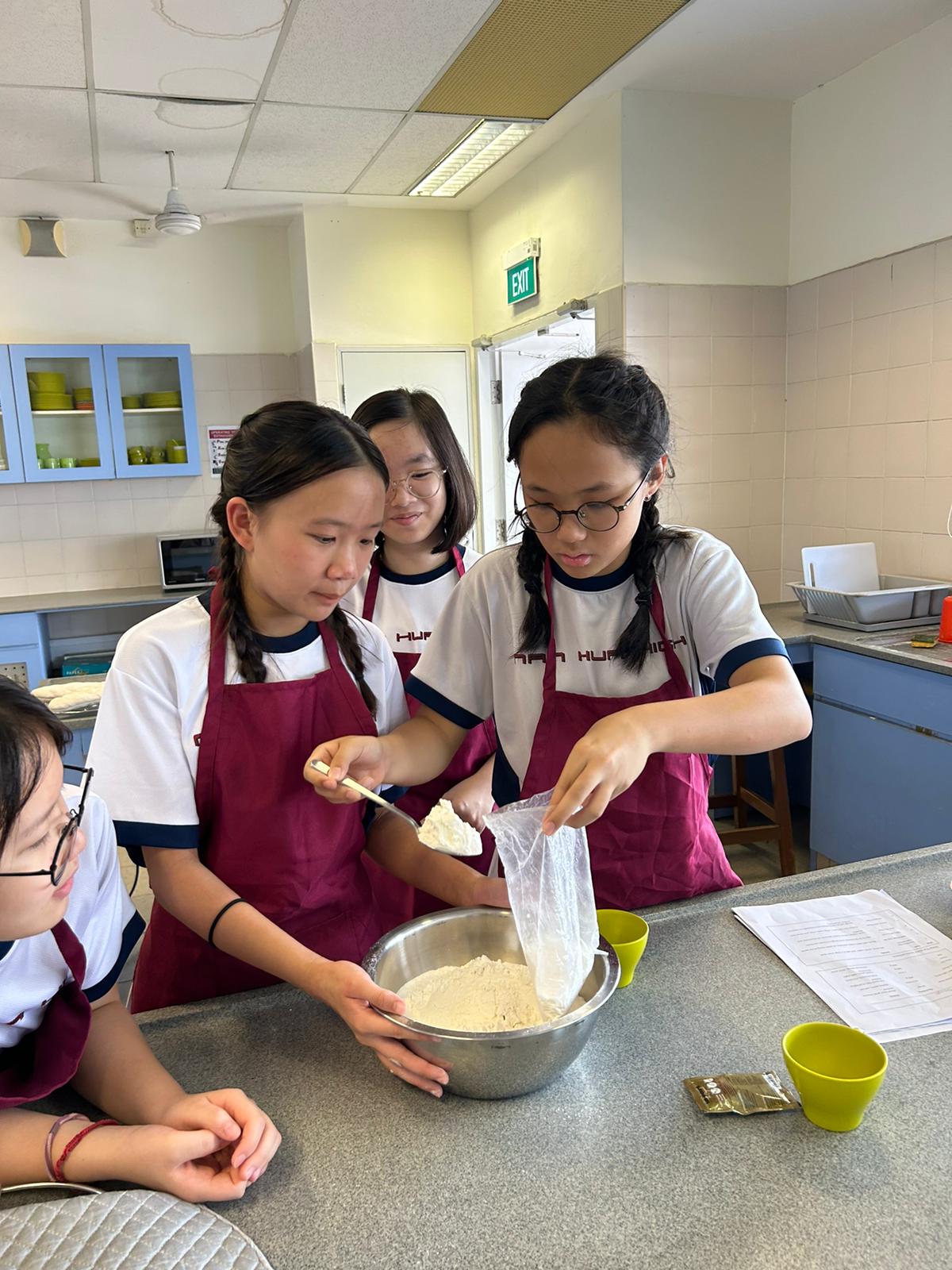
Applying Math concepts through the fun and meaningful interdisciplinary project
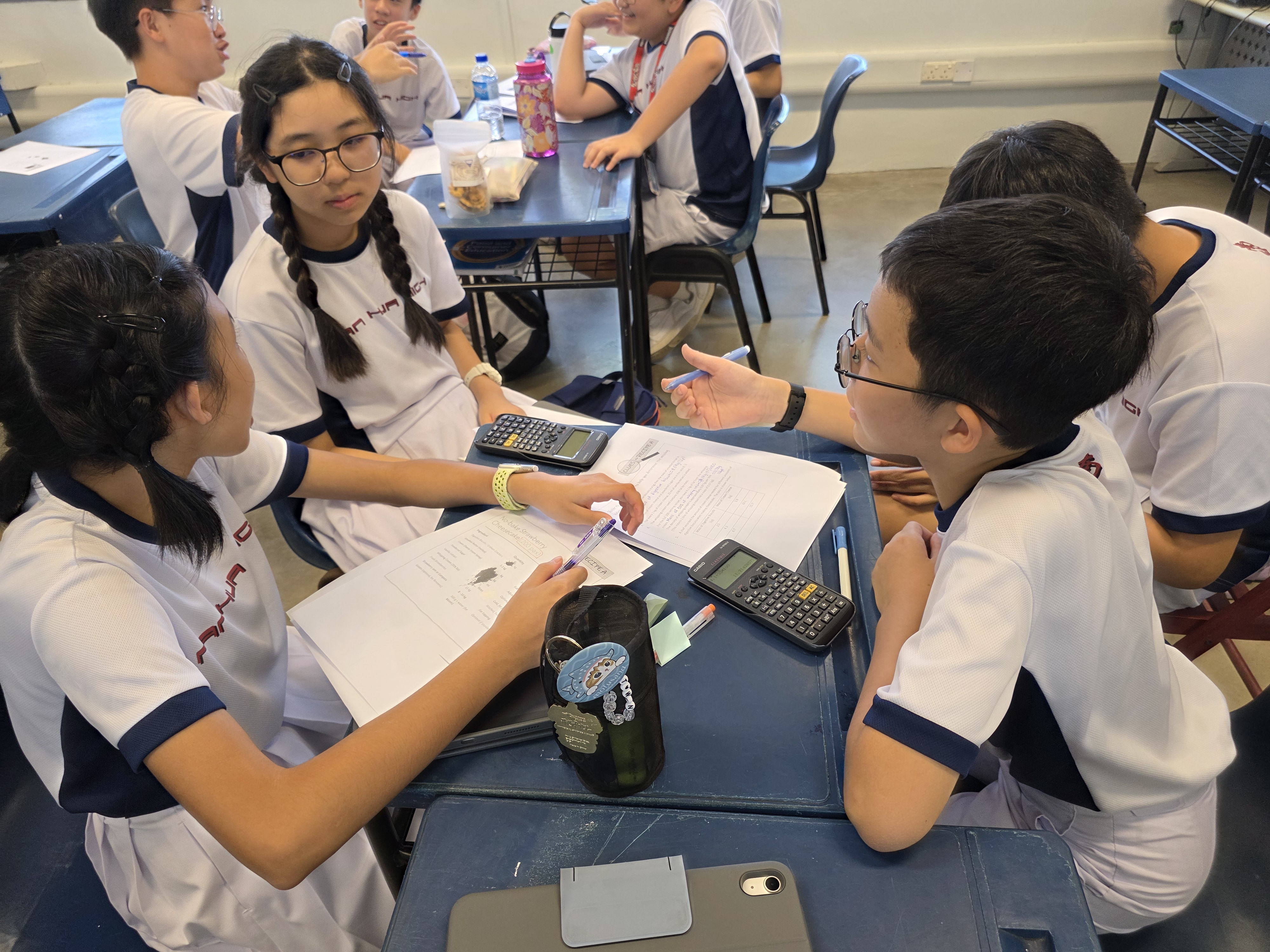
Using the clues to calculate the quantity needed in the recipe
Stretching minds beyond the curriculum
Our stretch programmes give students the chance to understand their unique strengths and pursue their passions beyond the curriculum.
Through experiences like the Math Modelling CnME Elective module and the International Mathematical Modelling Challenge (IMMC), students solve real-world problems, make decisions based on their ideas, collaborate with peers, and grow as confident, self-aware learners—truly reflecting strength in identity and passion in community.
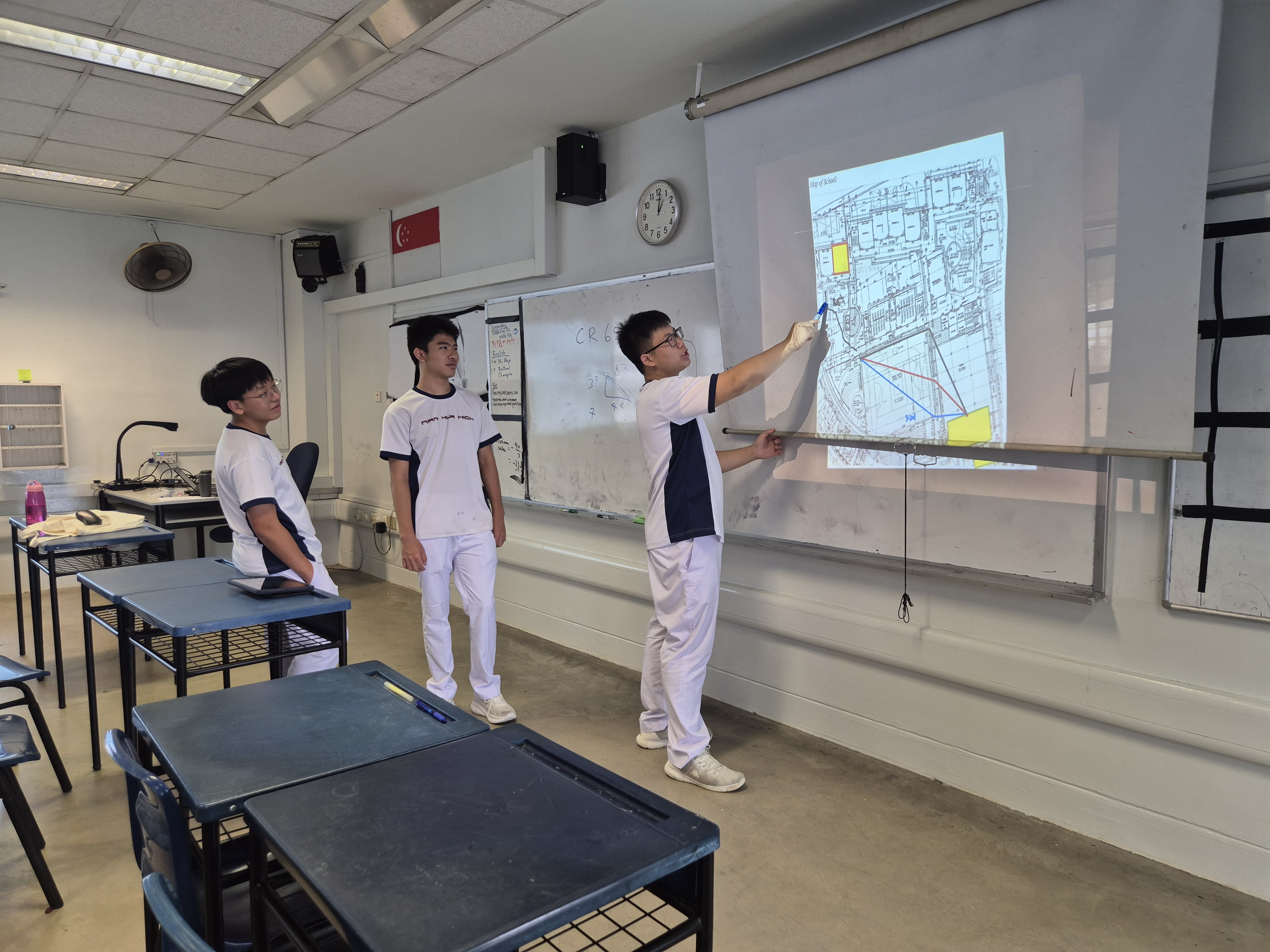
CnME module participants making use of Mathematical modelling to solve a problem
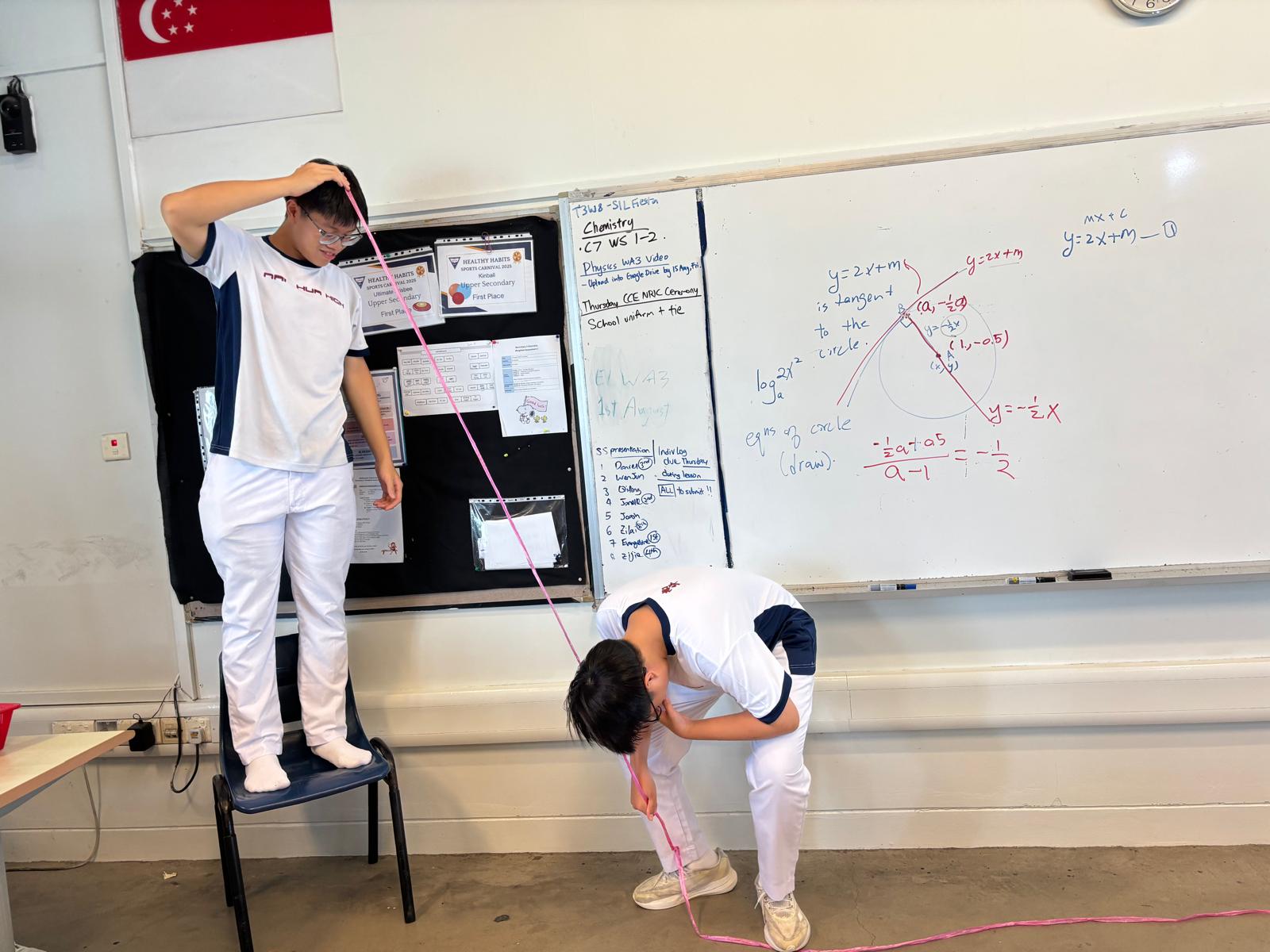
Students figuring out the best way to obtain the required angle
IMMC 2025
The 2025 International Mathematical Modeling Challenge (IMMC) centered on designing a fair and efficient game schedule for a Global Sports League (GSL) with 20 teams. Teams were tasked with designing a fair schedule that balanced travel and competition, while allowing for new teams to join the league. Our team comprising four Sec 4 students clinched a Distinction for their submission.
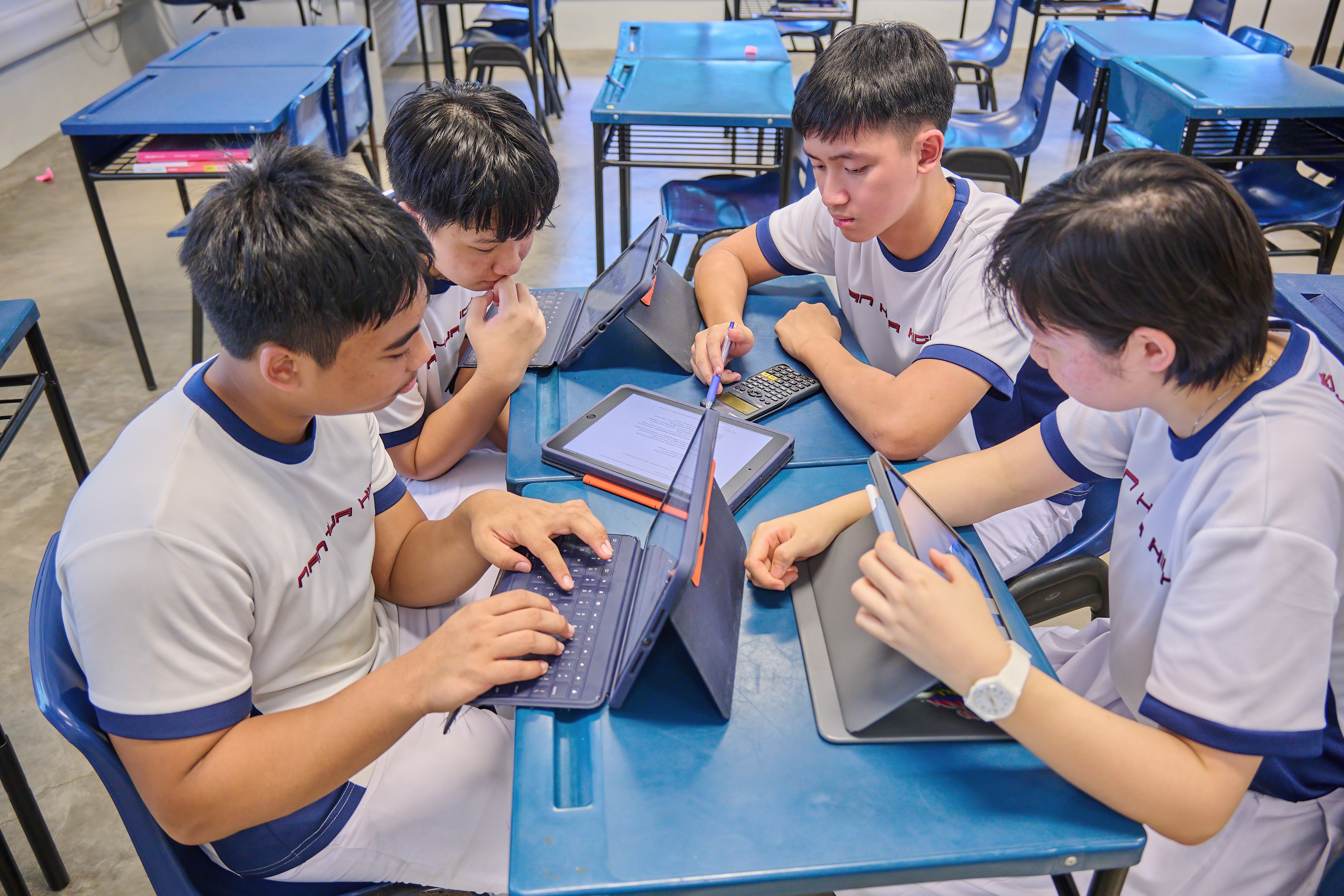
Our IMMC team engaging in active discussion and problem-solving
Singapore Mathematical Olympiad 2025
-
School Awards (Category 1): Bronze Award
-
Junior Section: 1 Gold, 1 Silver, 8 Bronze
-
Senior Section: 1 Gold, 2 Silver, 1 Bronze
Australian Mathematics Competition 2025
-
Year 7: 2 High Distinction, 12 Distinction
-
Year 8: 4 High Distinction, 8 Distinction
-
Year 9: 1 High Distinction, 5 Distinction
International Mathematical Modelling Challenge 2025 - Distinction
Nguyen Bao Lam (401)
Ong Jian Xun Kendric (401)
Yang Yuxuan (402)
Hlwan Moe Aung (402)